Guide · Production & sourcing
CNC Minimum Order Quantities: Prototype to Repeat Production
There is no industry-wide CNC minimum order quantity. Technical feasibility, accepted quantity and minimum commercial charge are separate questions. Request a written quotation for your actual part, and confirm material procurement, preparation, inspection and any outside-process constraints before treating a single-piece order as available.
ISO 9001:2015 Certified
Documented quality management system
Mitutoyo Quality Inspection
Calipers, micrometers, height gauge, DTIs
Export-Ready Packaging
VCI film, ISPM-15 wooden crates
RFQ Response in 24 Hours
Quote within one working day
NDA Available
Your drawings stay confidential
On this page9 sections
Start here
Quantity and commercial minimum are different
A supplier may be technically able to machine one component but still apply a minimum total charge. Another may require a batch because of stock purchases, workholding or a finishing supplier's terms. Asking only whether there is an MOQ can conceal these distinctions. Ask for accepted quantity, batch total and all minimum charges in the same quotation.
Do not generalise one supplier's policy to every CNC shop or every part. A simple turned spacer and a component with several setups and extensive inspection can have very different commercial considerations. The accepted scope should come from the current drawing-based offer rather than a headline promise of no minimums.
- 01 / 06
Explain why you need a prototype
Identify whether the part is for fit evaluation, functional testing, appearance approval or an urgent replacement. This helps define material, finish and inspection without unnecessarily applying production requirements to a non-functional sample. Any change from the final design needs explicit engineering approval and clear identification so the sample is not used accidentally in production.
If test results will support production approval, specify which properties and features must represent the final part. A sample made from an alternative grade or process might not answer the intended question. Include quantities needed for testing and reference retention, and confirm whether testing is performed by the buyer, a laboratory or the supplier.
- 02 / 06
Check material and outside-process constraints
The required raw material may be supplied in stock sizes larger than the finished part. A special grade, certification requirement or unavailable section can affect the offer even when only one piece is needed. Ask whether unused stock remains with the supplier and whether it can be reserved for a repeat order under an agreed arrangement.
If the drawing requires heat treatment, coating, grinding or another operation outside the stated in-house machining scope, request confirmation of how it will be handled. Such operations may introduce their own batch charges or approval steps. Do not infer that a low machining quantity also means every outside process is available economically at that quantity.
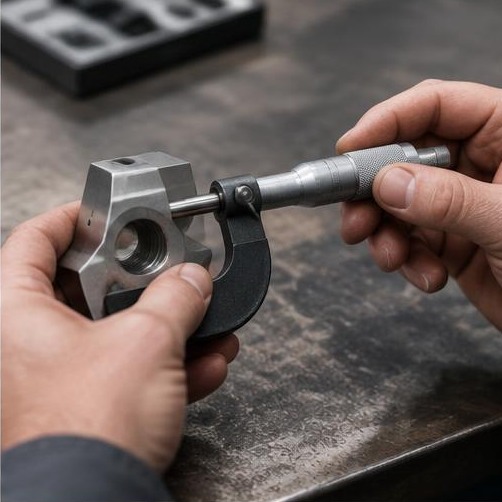
Illustrative machining and inspection imagery. - 03 / 06
First-article requirements need their own scope
An initial sample may require additional dimensional reporting, traceability or assembly checks. State the required report format, critical features and acceptance criteria. The supplier should confirm inspection access and method before committing to unusually demanding dimensions. A smaller order does not eliminate the need to resolve an unclear datum or contradictory drawing requirement.
Agree who approves the first article and what releases the next batch. Do not assume that payment, shipment or a successful visual check constitutes engineering approval. Keep the accepted drawing revision, material identity and inspection record together so repeat supply can be compared against the correct baseline.
- 04 / 06
Treat future volume as a forecast until ordered
A forecast can help a supplier discuss process planning, but it does not establish a firm quantity or guaranteed unit price. Request separate terms for the initial order and possible repeat production. Clarify whether fixture, programming or preparation charges are included, separately billed or subject to another agreement.
If a blanket order or scheduled release is proposed, agree stock ownership, payment timing, delivery dates and the response to engineering changes. A large forecast with uncertain releases can create inventory risk for both parties. Avoid presenting future demand as committed business merely to obtain a lower initial quotation.
- 05 / 06
Separate enquiry assumptions from order commitments
A discussion about making a single sample is not an accepted purchase order. Keep the supplier quotation, clarification responses and final order together, including the accepted drawing revision and inspection scope. If the order quantity differs from the quoted quantity, request confirmation of the revised price and schedule. List any customer-supplied material or tooling and agree its identification and handling. If the sample will be followed by another order, do not assume the original lead time or charges remain unchanged indefinitely. Confirm the repeat offer using the current requirement and keep obsolete quotations out of the purchasing approval record.
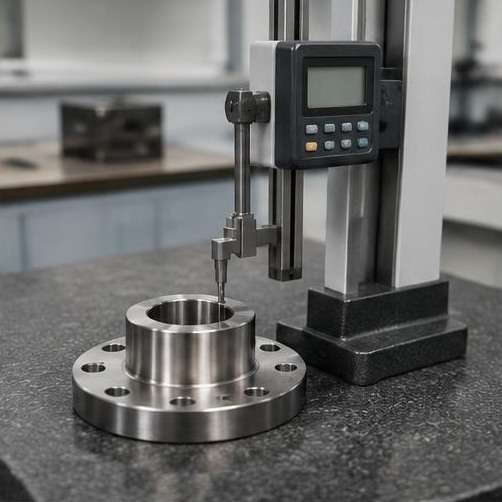
Illustrative machining and inspection imagery. - 06 / 06
Make your RFQ easy to accept or clarify
Send the drawing revision, model, material grade, requested quantity, purpose of the sample, finish, required documents and destination. Identify the requested delivery date and whether another date is acceptable. Ask for the actual accepted quantity and total order value rather than only a unit price based on an unspecified batch.
Precision Machining India reviews prototype and repeat machining requirements from Pune using its stated turning, 3-axis milling, shaft and tapping capabilities. This guide does not establish a fixed MOQ or waive job-specific charges. Obtain the written commercial offer, resolve exclusions and approve the technical scope before placing the order.
Frequently asked questions
Get a quote in 24hDoes CNC machining always have no minimum order?
No. Policies and job-specific constraints vary; accepted quantity and charges must be confirmed in the quotation.
Does a prototype quote lock in a future production price?
Not unless the written offer explicitly agrees that price and its quantity, revision and validity conditions.
Technical references
Keep exploring
Related capabilities, materials and markets
Everything below is machined in the same Pune plant to the same ISO 9001:2015 system. Follow whichever is closest to the part you are sourcing.
Related resources
6- Prototype CNC Machining: RFQ Checklist for OEM Buyers
- Prototype CNC Machining Cost: What Changes a Supplier Quote?
- Prototype CNC Machining: Design-for-Manufacture Review
- Prototype CNC Machining: Material Selection Before Ordering
- Prototype CNC Machining: Tolerances, Fits and Datum Decisions
- Prototype CNC Machining: Inspection Plan and Report Checklist
Machining capabilities
1Request for quotation
Send your drawing. Get a quote in 24 hours.
Upload STEP, IGES or PDF files. NDA available on request. Quoting: CNC Minimum Order Quantities: Prototype to Repeat Production.