Guide · Metal components
Precision Bushings: Surface Finish and Edge Requirements
Define finish and burr-free edge condition on functional contact surfaces separately from cosmetic appearance, with any additional treatment explicitly confirmed. The running bore and press-fit outside may need different finish requirements. Do not impose a single cosmetic standard on both.
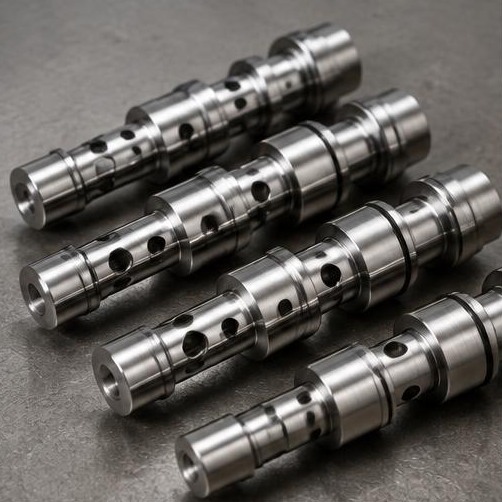
ISO 9001:2015 Certified
Documented quality management system
Mitutoyo Quality Inspection
Calipers, micrometers, height gauge, DTIs
Export-Ready Packaging
VCI film, ISPM-15 wooden crates
RFQ Response in 24 Hours
Quote within one working day
NDA Available
Your drawings stay confidential
On this page8 sections
Start here
The precision bushings decision
The running bore and press-fit outside may need different finish requirements. Do not impose a single cosmetic standard on both.
This guidance concerns bearing, guide and locating interfaces in industrial assemblies. For this subject, bushings in specified metals or engineering plastics are machined to drawing; the buyer must define load, lubrication and fit requirements. The quotation and approval plan should reflect the actual component rather than a general claim about precision manufacturing.
- 01 / 05
Describe the functional surface
Identify bearing, sealing, sliding and mounting areas on the drawing. State the relevant surface requirement and which faces it applies to. The same finish instruction on every face can increase work without improving the functional interface.
Define edge breaks and prohibited burrs where they affect assembly or contamination. Avoid vague instructions such as polish perfectly; uncontrolled material removal may alter a small feature or round an intended locating edge. Use the mating component or application specification to set the requirement.
- 02 / 05
Agree the delivered condition
Clarify whether the quotation is as-machined, deburred or includes a separately approved finish. Confirm availability and responsibility for any coating, treatment or specialised verification before ordering. Where a treatment changes dimensions, make the final inspection state explicit.
Provide an approved visual reference only where appearance matters, and keep it separate from dimensional acceptance. Packaging must then protect the agreed finish. A conforming surface at inspection can be scratched by contact during transport, so delivery protection belongs in the same order specification.
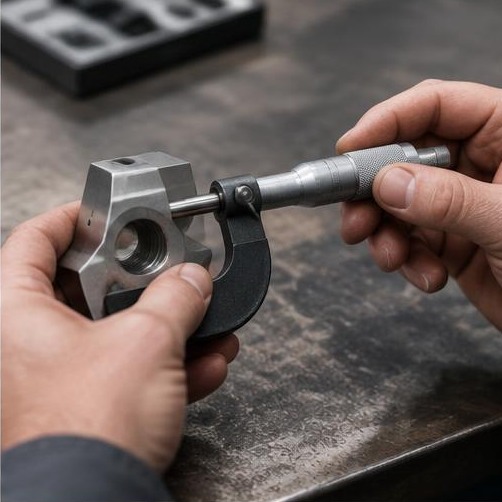
Illustrative machining and inspection imagery. - 03 / 05
Decision record for the purchasing file
Subject: Precision Bushings. Decision: Define finish and burr-free edge condition on functional contact surfaces separately from cosmetic appearance, with any additional treatment explicitly confirmed. Part-specific question: The running bore and press-fit outside may need different finish requirements. Do not impose a single cosmetic standard on both. Write the supplier's response beside that question and have the authorised engineer approve any change affecting the mating interface. Keep unresolved items visible rather than treating a received quotation as evidence that all technical requirements have been accepted.
Record the material decision using this criterion: metal and plastic choices depend on wear pair, lubrication, temperature and installation method. Record the feature review against bore, outside diameter, wall thickness, flange position and any lubrication features. Finally, record the agreed verification method for bore and outside diameter at agreed locations, wall-related checks and dimensional acceptance before or after installation as specified. These three entries connect the commercial offer to the physical component the buyer intends to accept. If any answer changes after the quote, confirm the effect on price, inspection and delivery before releasing the purchase order.
Use a simple outcome for each entry: accepted as specified, clarification required or engineer-approved alternative. Name the drawing revision and approval reference in the purchasing record. Do not mark a provisional suggestion as accepted until the responsible person has reviewed it. This leaves a clear basis for comparing the first delivered sample with the offer and for deciding what must be repeated on the next batch.
- 04 / 05
Part-specific review before release
Material review: metal and plastic choices depend on wear pair, lubrication, temperature and installation method. State the agreed designation and required evidence in the purchase specification. Where service performance depends on the material, the design authority must confirm suitability rather than delegating that decision to a generic machining quotation.
Geometry review: focus on bore, outside diameter, wall thickness, flange position and any lubrication features. Inspection should address bore and outside diameter at agreed locations, wall-related checks and dimensional acceptance before or after installation as specified. Resolve any feature outside the confirmed measurement scope before ordering, and use the same drawing interpretation for the sample, production report and receiving checks.
Delivery protection: avoid crushing thin rings and protect bore surfaces from grit or nicks. Identify the part and revision on the delivered batch. Damage, a material mix-up or an unclear report can prevent an otherwise dimensionally acceptable part from entering the assembly.
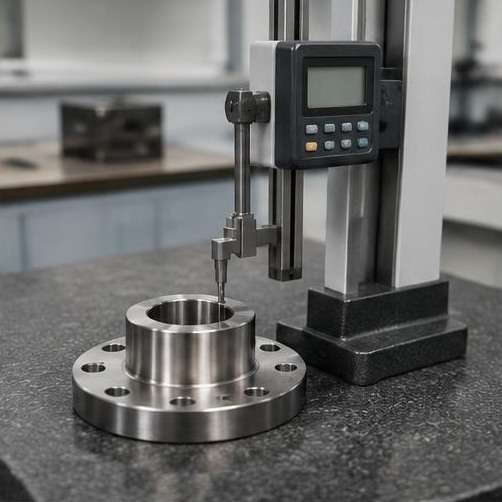
Illustrative machining and inspection imagery. - 05 / 05
Send a drawing for a scoped quotation
For a review of precision bushings, include housing fit, shaft clearance, operating load, lubrication and final installed-bore requirement. Upload a dimensioned PDF with its revision and a matching STEP or IGES model when available. Add sample and batch quantities, required documents and the delivery destination so the offer can separate technical scope from logistics.
Precision Machining India holds ISO 9001:2015 and uses LMW, Jyoti and Ace Micromatics turning centres, a 3-axis Ace Micromatics FANUC VMC and Mitutoyo inspection instruments. This does not imply AS9100, ISO 13485 or 5-axis capability. Any additional process or specialised test must be reviewed and confirmed separately. Request an NDA before sharing confidential drawings when needed, then use the quotation form to begin the part-specific discussion.
Frequently asked questions
Get a quote in 24hHow should surface finish be specified for precision bushings?
Define finish and burr-free edge condition on functional contact surfaces separately from cosmetic appearance, with any additional treatment explicitly confirmed. The running bore and press-fit outside may need different finish requirements. Do not impose a single cosmetic standard on both.
What information is needed to review my precision bushings part?
Provide housing fit, shaft clearance, operating load, lubrication and final installed-bore requirement, the controlled PDF drawing, matching model, material designation, quantities and delivery destination. Capability and pricing are confirmed against the actual part.
Does machining approval establish final application suitability?
No. Drawing conformity and machining scope must be distinguished from buyer-defined assembly, service and regulatory approval. Confirm metal and plastic choices depend on wear pair, lubrication, temperature and installation method and any required testing before release.
Technical references
Keep exploring
Related capabilities, materials and markets
Everything below is machined in the same Pune plant to the same ISO 9001:2015 system. Follow whichever is closest to the part you are sourcing.
Related resources
6- Press-Fit vs Slip-Fit Bushings: Drawing & Tolerance Guide
- Sleeve vs Flanged Bushings: Custom Manufacturing & Drawing Checklist
- CNC Turning: RFQ Checklist for OEM Buyers
- CNC Turning Cost: What Changes a Supplier Quote?
- CNC Turning: Design-for-Manufacture Review
- CNC Turning: Material Selection Before Ordering
Machining capabilities
1Request for quotation
Send your drawing. Get a quote in 24 hours.
Upload STEP, IGES or PDF files. NDA available on request. Quoting: Precision Bushings: Surface Finish and Edge Requirements.