Guide · Buyer essentials
Export Packaging for Machined Parts: VCI, ISPM-15 and Crating
How precision parts are protected during 4–40 days at sea, and what to specify in your purchase order.
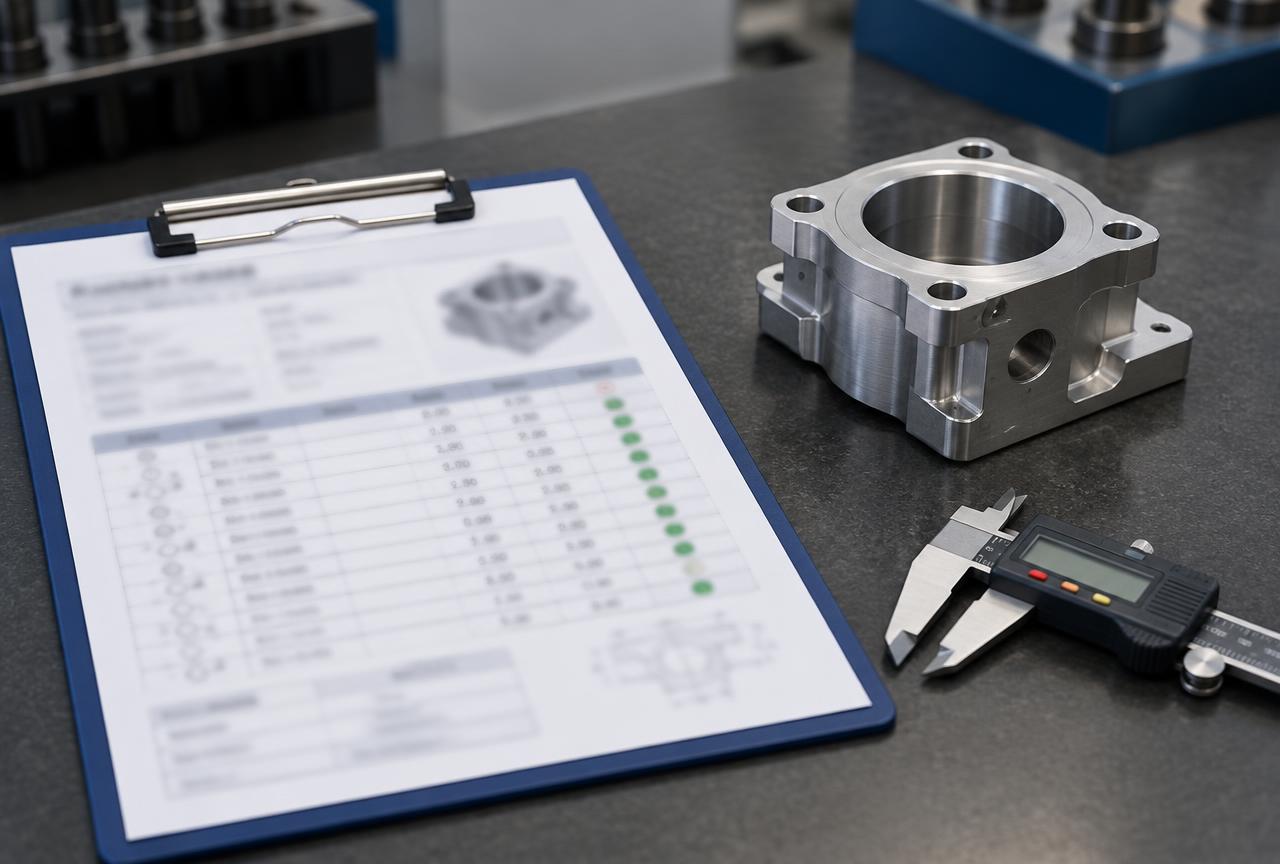
ISO 9001:2015 Certified
Documented quality management system
Mitutoyo Quality Inspection
Calipers, micrometers, height gauge, DTIs
Export-Ready Packaging
VCI film, ISPM-15 wooden crates
RFQ Response in 24 Hours
Quote within one working day
NDA Available
Your drawings stay confidential
On this page8 sections
What the pack has to do
A machined part leaves Pune dry, bright and to tolerance. Everything in the pack exists to keep it that way through handling, humidity and weeks in a container.
VCI anti-rust film
Vapour corrosion inhibitor film releases a protective vapour inside the sealed bag, so bright steel surfaces stay clean without a heavy oil coat to remove on arrival.
Humidity control
Silica gel desiccant goes inside the crate to absorb the moisture that condenses as a container crosses climate zones. Steel parts are cleaned and oiled where appropriate before wrapping.
ISPM-15 heat-treated wood
All wooden crates and pallets are heat-treated and stamped to ISPM-15, which is what customs inspects. Untreated wood is refused at many destinations.
Restraint against bending
Shafts travel in individual tubes or V-block cradles so a slender part cannot deflect under the weight of the stack. Small parts are separated in compartment boxes.
Marking and paperwork
Crates carry part numbers, quantities, gross and net weights and handling marks. Commercial invoice, packing list, certificate of origin and inspection report go with every shipment.
Built for the voyage length
The same part is packed differently for a 4–7 day run to the UAE and a 25–35 day crossing to the USA. State the destination port on the order so the pack matches it.
- 01 / 03
Corrosion protection
Steel parts are cleaned, oiled where appropriate and wrapped in VCI film. Silica gel desiccant controls humidity inside the crate.
- 02 / 03
Mechanical protection
Shafts go in individual tubes or V-block cradles. Small parts are separated in compartment boxes. Plastic parts are bagged to avoid scratches and contamination.
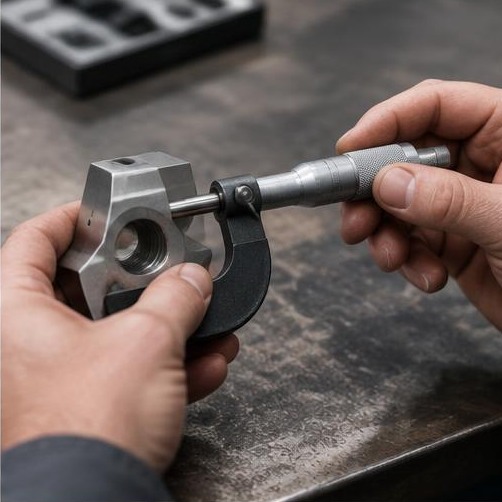
Illustrative machining and inspection imagery. - 03 / 03
Crates and pallets
All wooden packaging is ISPM-15 heat-treated and stamped. Crates carry part numbers, quantities, gross and net weights and handling marks.
How each part type is packed
Standard practice by part family. Anything you need differently, including your own labelling or barcode format, should be written into the purchase order.
Shafts and long turned parts
Slender, bend-sensitive, bright steel
- Corrosion
- Cleaned, oiled where appropriate, wrapped in VCI film
- Mechanical
- Individual tube, or a V-block cradle that supports the full length
- Outer pack
- Rigid crate, parts restrained so they cannot shift or roll
- Marking
- Part number, quantity, length, gross and net weight
Small turned and milled parts
High count, thread and edge damage
- Corrosion
- VCI bags with desiccant in the sealed carton
- Mechanical
- Compartment boxes or interleaved layers so faces do not rub
- Outer pack
- Cartons palletised, strapped and stretch-wrapped
- Marking
- Count per bag and per carton, so receiving can verify without opening all
Engineering plastic parts
PTFE, PEEK, acetal, nylon
- Contamination
- Bagged individually or in small groups to keep surfaces clean
- Mechanical
- No metal packed loose against plastic; no strapping across a sealing face
- Environment
- Kept out of direct sun and away from heat; no oil coating applied
- Marking
- Material and grade on the bag, so stock is not mixed on arrival
Plated, anodised or heat-treated parts
Returned from a partner, re-inspected here
- Before packing
- Re-inspected in house after the partner process
- Corrosion
- VCI film over the finished surface, with soft interleaving
- Mechanical
- Separated so coated faces cannot contact one another in transit
- Documents
- Inspection report references the finish applied
What the pack has to survive
Port-to-port transit from Nhava Sheva or Mumbai. These figures exclude customs clearance and inland delivery, and they are the reason packing is specified by destination.
Day 0
Pack and dispatch
Parts cleaned, VCI wrapped, restrained, crated in ISPM-15 stamped wood, marked and loaded. Commercial invoice, packing list, certificate of origin and inspection report issued.
Days 2–6
Air freight
Short exposure, but more handling points per shipment. Edge and thread protection matters more than desiccant on this route.
Days 4–7
Sea to the UAE
A short crossing with high ambient humidity at both ends. VCI film and a sealed bag do most of the work.
Days 18–28
Sea to Europe and the UK
Several climate changes and repeated condensation cycles inside the container. Desiccant quantity is matched to the sealed volume.
Days 25–35
Sea to the USA
The longest routine exposure. Crates are built to be stacked and handled more than once, and seals are checked before dispatch.
On arrival
Receiving and storage
Keep parts in the VCI bag until they are needed. Opening every bag on goods-in ends the corrosion protection weeks before the parts are used.
What to write into the purchase order
Specify this
- VCI anti-rust film on all ferrous parts, with desiccant inside the sealed pack
- ISPM-15 heat-treated and stamped crates and pallets
- Individual tubes or cradles for shafts and any part over a length you nominate
- Maximum carton or crate weight your receiving bay can handle without a forklift
- Labelling content and position: part number, revision, quantity, order number, weights
- Standard pack quantity per bag or carton, so cycle counting works
- The document set required with the shipment, and any certificate of origin you need
- Destination port, so the pack is matched to the transit time
Do not leave these open
- "Export packing" with no detail, which means different things to different suppliers
- Untreated or unstamped wood, which risks refusal or fumigation at destination
- Heavy preservative oil on parts that go straight to assembly and must be degreased first
- Shafts packed loose in a crate, where stack weight bends them
- Strapping run across a sealing face, a thread or a finished surface
- Crate weights above what your unloading point can take
- Opening all VCI bags at goods-in, which ends the protection early
The short answer
How are precision machined parts packed for export?
Ferrous parts are cleaned, oiled where appropriate and sealed in VCI anti-rust film with silica gel desiccant; shafts go in individual tubes or V-block cradles; small parts are separated in compartment boxes; and everything travels in ISPM-15 heat-treated, stamped wooden crates marked with part numbers, quantities and gross and net weights. Commercial invoice, packing list, certificate of origin and inspection report accompany each shipment, with an EN 10204 3.1 material certificate on request.
- VCI film plus desiccant for corrosion; tubes and cradles against bending
- ISPM-15 stamped wood, which is what customs checks at destination
- Packing matched to the route: 4–7 days to the UAE, 25–35 days to the USA
- Partner-finished parts are re-inspected in house before packing
- Write the labelling, pack quantity and crate weight limits into the order
Keep exploring
Related capabilities, materials and markets
Everything below is machined in the same Pune plant to the same ISO 9001:2015 system. Follow whichever is closest to the part you are sourcing.
Related resources
6- How to Source CNC Machined Parts from India: A Buyer's Guide
- PTFE vs PEEK vs Delrin vs Nylon: Choosing a Machinable Plastic
- Precision Shaft Design Checklist for Pump, Motor and Gearbox Shafts
- Incoterms Explained for Machined Parts Buyers: EXW, FOB and CIF
- 10 Ways to Reduce the Cost of CNC Machined Parts
- China+1 Sourcing for Precision Machined Components: Why India
Machining capabilities
4Request for quotation
Send your drawing. Get a quote in 24 hours.
Upload STEP, IGES or PDF files. NDA available on request. Quoting: Export Packaging for Machined Parts: VCI, ISPM-15 and Crating.