Guide · Buyer essentials
10 Ways to Reduce the Cost of CNC Machined Parts
Practical design and purchasing changes that cut piece price without compromising function.
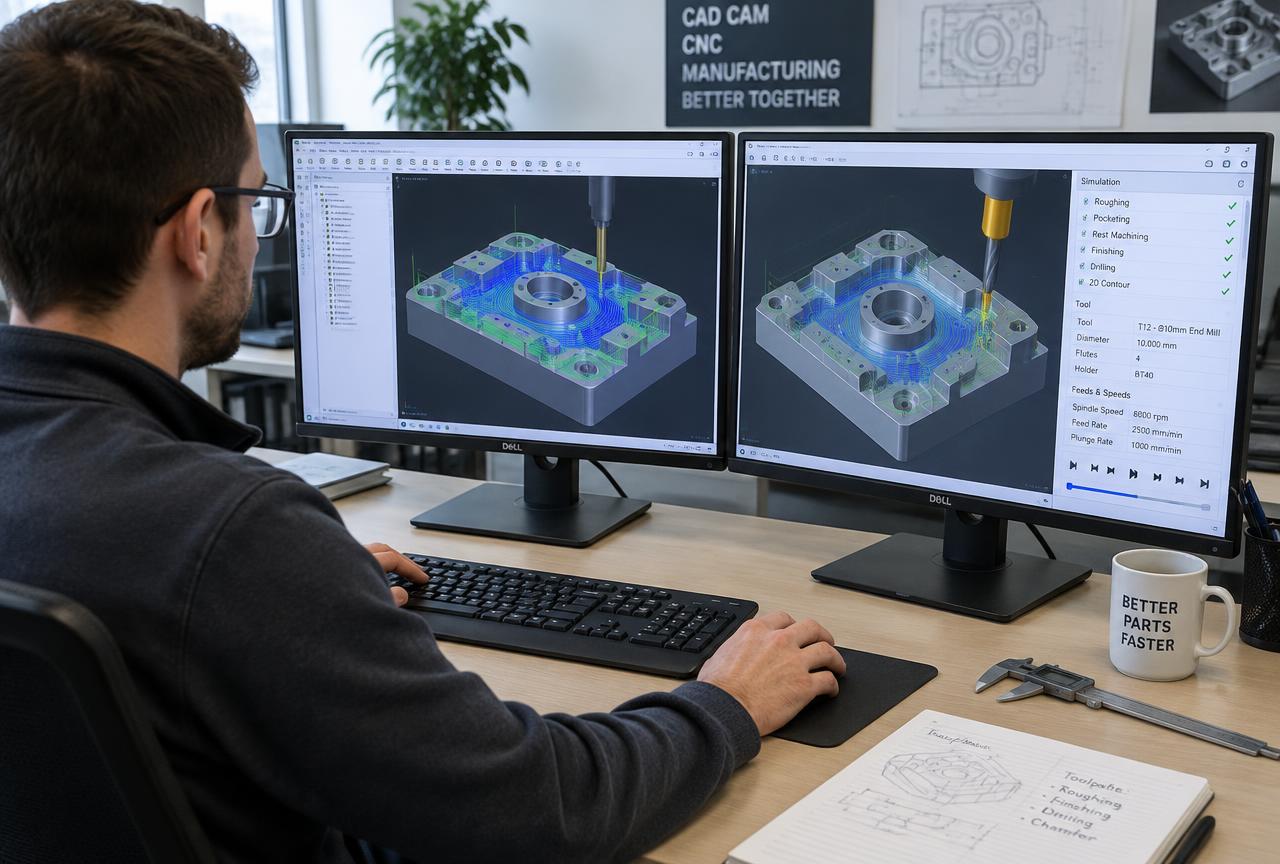
ISO 9001:2015 Certified
Documented quality management system
Mitutoyo Quality Inspection
Calipers, micrometers, height gauge, DTIs
Export-Ready Packaging
VCI film, ISPM-15 wooden crates
RFQ Response in 24 Hours
Quote within one working day
NDA Available
Your drawings stay confidential
On this page8 sections
Where the cost actually sits
Piece price on a machined part is setup, cycle time, material, inspection and packing. Each lever below moves one of those, and the design levers move the most.
Loosen the non-functional tolerances
Hold ISO 2768-m generally and name tight fits only on the two or three features that locate something. Every tight feature adds a finishing pass and a logged measurement.
Use standard threads and drill sizes
Standard metric threads and stock drill diameters are tooled already. A non-standard thread or an odd bore diameter buys a tool for your part alone.
Open up pockets and corners
Deep narrow pockets need long slender cutters, light cuts and long cycles. Allow a corner radius that suits a sensible cutter diameter rather than a sharp internal corner.
Choose a free-machining grade
Where corrosion requirements allow, SS 303 cuts faster than SS 316, and CZ121 brass faster than most bronzes. State the application so an alternative can be proposed.
Buy annual volume, call it off in batches
One annual quantity with scheduled releases spreads setup across more pieces and lets bar stock be bought once. There is no fixed minimum order quantity either way.
Plan freight instead of rescuing it
Consolidate into full pallets or containers and order early enough to go by sea. Sea is 18–28 days to Europe and the UK and 25–35 days to the USA, against 2–6 days by air.
- 01 / 03
Design changes
Loosen tolerances on non-functional features. Use standard thread sizes and drill diameters. Avoid deep narrow pockets and sharp internal corners. Choose free-machining grades such as SS 303 or CZ121 brass where corrosion needs allow.
- 02 / 03
Purchasing changes
Order annual quantities with scheduled call-offs. Combine similar parts on one RFQ. Accept as-machined finishes where cosmetics do not matter. Share the application so we can suggest alternatives.
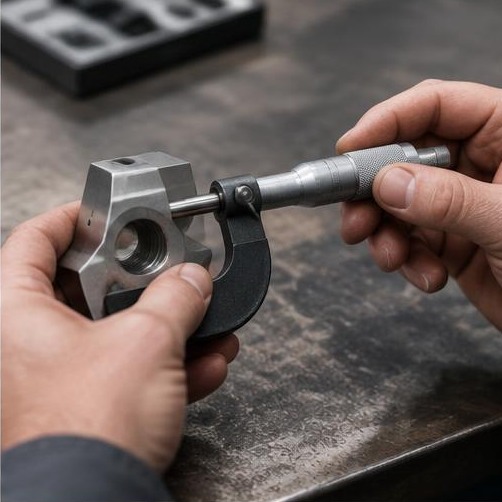
Illustrative machining and inspection imagery. - 03 / 03
Logistics changes
Consolidate shipments into full pallets or containers and plan ahead to use sea freight instead of air.
A cost review in five passes over the drawing
Work through an existing part in this order. Most drawings give up a double-digit percentage of their price in the first two passes, without any change to function.
- 01
Separate functional from inherited
Mark the features that locate, seal or transmit load. Everything else was probably copied from an older drawing and can take the general tolerance.
- 02
Re-examine the material
Confirm the grade is driven by the environment, not by habit. Ask whether a free-machining or more readily available grade meets the same requirement.
- 03
Simplify the geometry
Remove sharp internal corners, shorten deep pockets, consolidate step diameters and avoid features that force a second setup or a different machine.
- 04
Review finish and certification
Accept as-machined surfaces where cosmetics do not matter, and request a material certificate or a coating only where the application needs it.
- 05
Repackage the purchase
Combine similar parts into one RFQ, state annual usage, agree call-offs and plan shipments so sea freight is the default rather than the exception.
Tight everywhere against tight where it matters
The same part, drawn two ways. Nothing about the function changes between these columns; only the amount of work the drawing demands.
| Criterion | Tight tolerance on every feature The inherited drawing | ISO 2768-m plus named fits The same part, priced sensibly |
|---|---|---|
| Finishing passes | A dedicated finish pass on nearly every surface | Finish passes only on the features that locate something |
| Setups and operations | Extra operations to reach features at the tight band | Fewer setups, more features completed in one go |
| Inspection per piece | Micrometer reading and a logged value on every feature | Caliper check overall, micrometer on the named diameters |
| Scrap and rework risk | Any feature out of band condemns the piece | Risk concentrated on a small number of controlled features |
| Quoting | Priced defensively, because every feature is critical | Priced on actual cycle time |
| When it is right | Genuine bearing seats, seal faces and mating fits | Everything else on the drawing |
At Ø25 mm, ISO 2768-m allows ±0.2 mm while an h6 fit allows 13 µm. That is a fifteen-fold difference in the work required to guarantee one diameter.
Cost levers, and the false economies
These reduce the delivered cost
- General tolerances to ISO 2768-m, with functional fits named individually
- Standard metric threads, stock drill diameters and generous internal corner radii
- Free-machining grades such as SS 303 or CZ121 brass where corrosion allows
- Annual quantity on the RFQ, with scheduled call-offs against it
- Several similar parts combined into one enquiry so setups and bar stock are shared
- As-machined finish accepted where appearance has no function
- Full-pallet or full-container shipments planned far enough ahead to travel by sea
- The application described, so an alternative material or geometry can be suggested
These look cheaper and are not
- Cutting the sample batch to save money, then finding the fit problem in production
- Dropping the dimensional inspection report, which removes the evidence when a batch is questioned
- Splitting one annual volume across many tiny orders, so setup is paid for repeatedly
- Choosing EXW on price and absorbing the cost of clearing the goods out of India yourself
- Air freighting a routine order because the release came too late
- Specifying a coating or certificate the application never needed
- Removing the VCI film or the ISPM-15 crate to save packing cost on a 25–35 day voyage
The short answer
How to reduce the cost of CNC machined parts
Price follows setup, cycle time, material, inspection and packing, so attack those rather than the quoted rate. Hold ISO 2768-m generally and name tight fits only where a bearing, seal or mating part demands one; use standard threads and drill sizes; open sharp corners and shallow out deep pockets; choose a free-machining grade where corrosion permits; commit an annual quantity with scheduled call-offs; and consolidate shipments so sea freight is the default.
- Design: tolerances, standard features, corner radii, grade selection
- Purchasing: annual volume, call-offs, combined RFQs, as-machined finishes
- Logistics: full pallets or containers, sea instead of air, planned release dates
- Share the application and a drawing with a STEP model; the quote returns in 24 hours
- No fixed minimum order quantity, so a trial batch does not need to be padded
Keep exploring
Related capabilities, materials and markets
Everything below is machined in the same Pune plant to the same ISO 9001:2015 system. Follow whichever is closest to the part you are sourcing.
Related resources
6- How to Source CNC Machined Parts from India: A Buyer's Guide
- PTFE vs PEEK vs Delrin vs Nylon: Choosing a Machinable Plastic
- Precision Shaft Design Checklist for Pump, Motor and Gearbox Shafts
- Incoterms Explained for Machined Parts Buyers: EXW, FOB and CIF
- Export Packaging for Machined Parts: VCI, ISPM-15 and Crating
- China+1 Sourcing for Precision Machined Components: Why India
Machining capabilities
4Request for quotation
Send your drawing. Get a quote in 24 hours.
Upload STEP, IGES or PDF files. NDA available on request. Quoting: 10 Ways to Reduce the Cost of CNC Machined Parts.